 Step by Step Guide
 How to clean windows without streaks
Clean windows from top to bottom with a simple solution, a squeegee, and microfiber, while removing dirt from frames, corners, and tracks.
Updated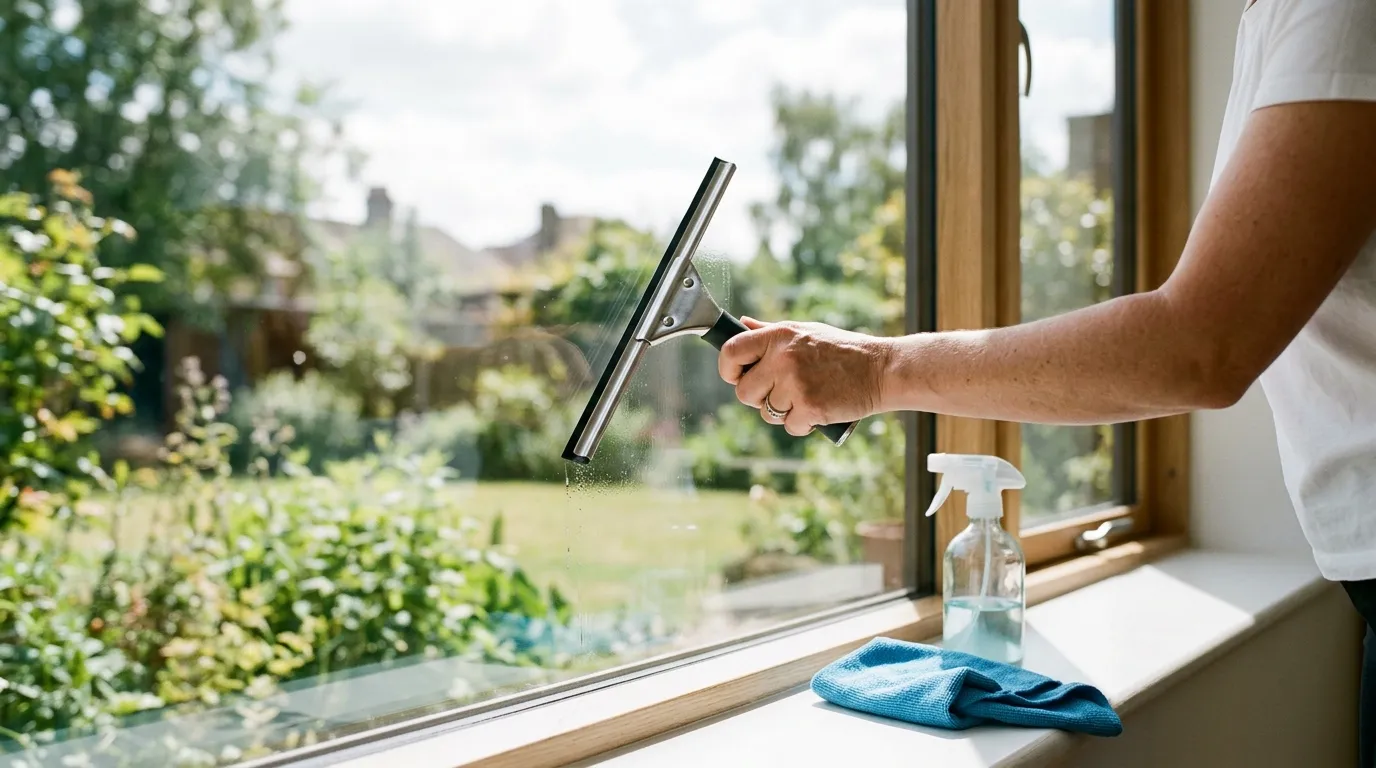
Streak-free glass depends more on method than on a powerful cleaner. Direct sun, too much detergent, or a saturated cloth can make the liquid dry before it is removed, leaving a map of drops and cloudy lines behind.
Order matters as well. Cleaning tracks and frames first keeps dust from turning into mud on finished glass, and working from top to bottom prevents dirty runoff from crossing a clean section. A basic solution, a sound squeegee, and separate microfiber cloths are enough for most household windows.
Safety: never mix cleaning products, especially bleach, acids, vinegar, or ammonia. Work only from stable, secure footing. Use a proper extension tool or hire a professional for exterior glass that would require leaning out or climbing unsafely.
Choose the right time and prepare the area
Pick a time when direct sunlight is not heating the pane and wind is light. Heat speeds evaporation, so cleaner dries before the squeegee reaches it; wind carries fresh dust onto damp glass. For a window exposed all day, work early, late, or in small sections.
Move curtains, blinds, plants, and objects away from the sill. Protect nearby flooring, walls, and furniture with an old towel, especially indoors. Identify the frame material and follow manufacturer restrictions for painted wood, metal, window film, or coated glass. Test any solution in an inconspicuous corner.
Assign each cloth a job: one for frames, one for wiping the squeegee blade, and one clean, dry cloth for final details. Microfiber washed with fabric softener can leave a film, so use residue-free cloths.
Remove dust from frames and tracks
Begin at the top of the frame. Use a soft brush or vacuum attachment to remove loose dust, webs, and insects. Agitate debris in the tracks with a small brush and vacuum it before adding water. Wetting it first turns the dust into compacted sludge that is harder to lift from corners.
Wipe the frame with a damp cloth and a minimal amount of mild dish soap. Clean handles, joints, and weather seals without soaking them. Wrap the cloth around a blunt tool or the brush handle to reach narrow track channels, taking care not to force or block visible drainage openings.
Dry excess moisture and replace the water if it becomes dark. Dirt from the frame should not enter the bucket reserved for the pane.
Mix a simple cleaning solution
Fill a clean bucket with water and add only a few drops of mild dish soap. The mixture should wet the surface and help the squeegee glide, not produce a deep cap of foam. The more soap left on the glass, the more likely it is to dry in visible bands.
For light mineral spots from water droplets, test a little white vinegar diluted with water on ordinary glass. Do not use it on natural stone, sensitive frames, or any surface whose manufacturer excludes acids, and never combine it with bleach or another cleaner. Stubborn mineral crust may need material-specific treatment to avoid scratches.
Change the water whenever it turns cloudy. In areas with very hard water, filtered water for the final wash may reduce dried mineral dots.
Wash the glass from top to bottom
Wet the soft sponge or window washer, then squeeze out enough liquid to prevent flooding the wall. Apply the solution at the top with overlapping strokes, covering only an area you can squeegee before it dries. Divide large panes into manageable sections.
Gently work over fingerprints and splashes. Avoid steel wool, abrasive sponge surfaces, cleaning powders, or improvised blades. Tiny hard particles can scratch glass and damage applied films. For stuck-on soil, keep it damp for a few minutes, then repeat with a soft tool instead of increasing pressure.
Pay attention to corners and the strip next to the frame, where the washer tends to collect dirty water. Catch runoff on the sill as you proceed.
Use the squeegee with consistent strokes
Check that the rubber is straight, flexible, and free of nicks. Set the blade at an upper corner and draw it across in one firm horizontal pass, keeping the full edge in contact. Vertical strokes also work: begin at the top and pull downward in parallel lines. Keep one direction and overlap each path slightly.
After every pass, wipe the rubber with its assigned microfiber cloth. This keeps removed dirt from returning on the next line. Angle the tool slightly so water moves toward the area that is still wet, and use steady pressure without bending the blade.
Choose a smaller squeegee for divided panes. A blade that is too wide loses contact near edges and leaves thin tracks.
Dry the edges and inspect the finish
Use a clean, dry microfiber cloth only along edges, in corners, and on any fine line left by the blade. Avoid rubbing the entire pane with a damp cloth because that redistributes residue. Fold the cloth into quarters and switch to a dry face as each section becomes moist.
View the glass from two angles in indirect side light. If you find a band, dampen that section and make another squeegee pass. Scrubbing a dry mark aggressively often creates a larger cloudy patch.
Wipe the sill and remove floor protection. One useful diagnostic method is to squeegee vertically indoors and horizontally outdoors. The direction of a remaining line tells you which side needs correction.
Clean the tools and prevent buildup
Rinse the squeegee, washer, and bucket so dirt and soap do not dry on them. Store the squeegee without weight resting on the rubber and away from heat that could warp it. Wash microfiber separately from lint-producing fabrics, skip fabric softener, and let the cloths dry fully.
Between full cleanings, lift fingerprints with a barely damp microfiber and dry the spot immediately. Vacuum tracks periodically and keep visible drainage channels open. This reduces the mud that rain can splash onto the glass and makes the next detailed cleaning easier.
Do not apply shine or water-repellent coatings until you have confirmed that they are compatible with the glass treatment, film, frame finish, and seals. A residue-free surface generally stays visually clean longer.
Common mistakes
- Working in direct sun. Cleaner evaporates before removal and leaves spots and bands.
- Adding too much detergent. Extra foam creates a sticky residue instead of a cleaner finish.
- Cleaning the pane before the frame. Dirty runoff from frames and tracks crosses the completed work.
- Skipping the blade wipe. A dirty squeegee transfers soil into every new stroke.
- Using one cloth for every task. Frame grime and moisture return to the glass during detailing.
- Scrubbing with abrasives. Scratches in glass, film, and metal finishes may be permanent.
The dependable sequence is simple: dry-clean frames and tracks, wash the glass from the top, remove the solution in even squeegee strokes, and reserve dry microfiber for the edges. Repeat the method before adding more chemical or more force.
Frequently asked questions
What simple homemade solution works for windows?
Water with a few drops of mild dish soap handles most soil and helps the squeegee glide. Too much soap leaves residue. Diluted white vinegar may help with light mineral spots, but it should never be mixed with other cleaners.
Why do windows look streaky after they dry?
Common causes include excess cleaner, dirty water, a damaged squeegee blade, fabric-softener residue on cloths, and direct sun. Work in manageable sections and wipe the blade after every pass to prevent streaks.
Should I use newspaper to polish glass?
A clean microfiber cloth is more reliable. Newspaper may release ink, fall apart when wet, or mark delicate frame finishes. Short-pile microfiber removes small residues with better control and can be washed for reuse.
How should I clean the outside of a high window?
Use a suitable extension pole while standing on a stable surface, or hire a professional if the glass cannot be reached safely. Never lean outside, stand on furniture, or place a ladder on an unstable base just to reach it.
Informational content. For risky situations or technical, legal or medical doubts, talk to a professional.