 Step by Step Guide
 How to clean a burnt-on oven with baking soda, step by step
A step-by-step guide to softening baked-on grease with baking soda and gentle heat, cleaning the glass and racks without scratching, and avoiding the smoke that fills your whole home with a burnt smell.
Updated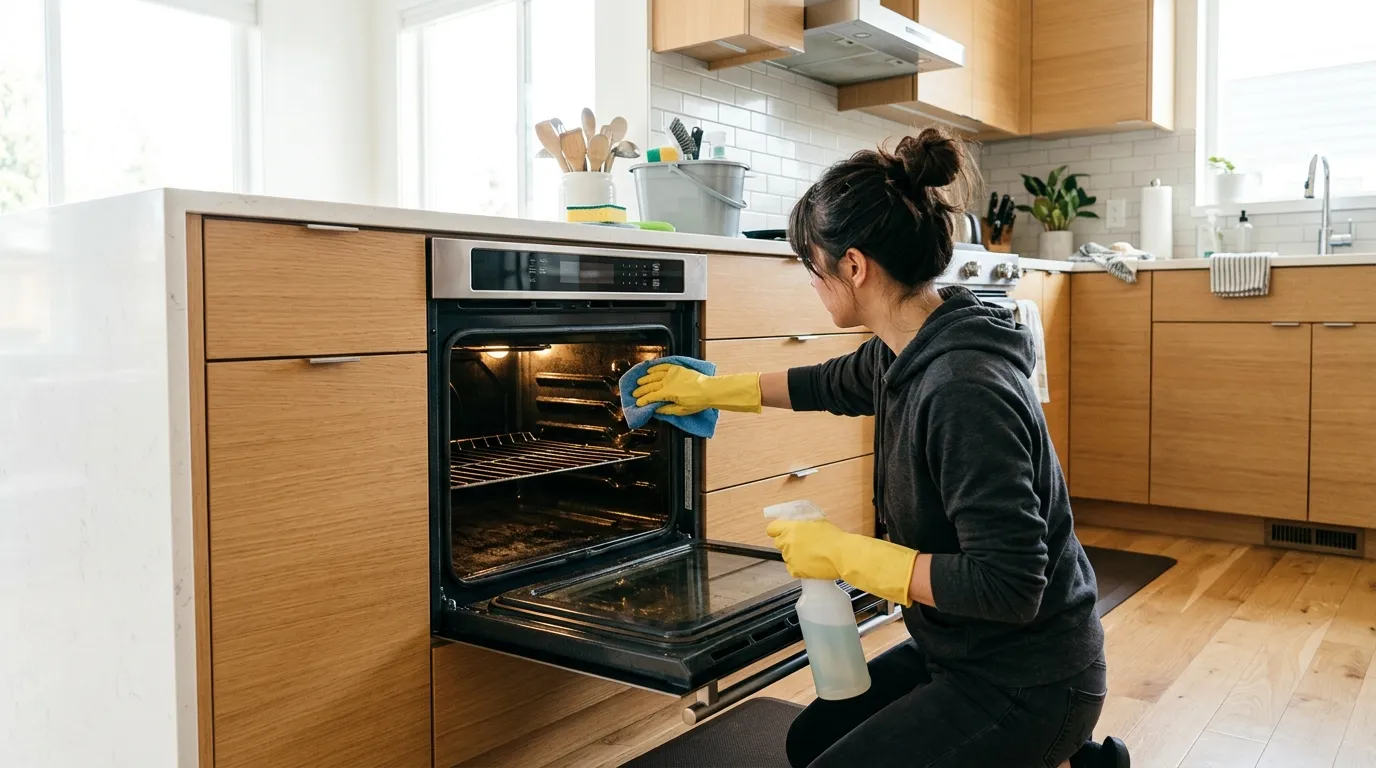
A caked-up oven is one of those jobs people put off week after week. Every roast leaves another layer of grease, and the heat turns that grease into a crust that gets thicker and harder to shift. It feels like a defeat because most “clean your oven” methods are one of two things: the chemical spray that stinks out the whole house, or the self-clean cycle that blazes past 400 °C and gives off so much smoke you have to open every window.
This guide takes a simpler, nearly odor-free route: a paste of baking soda, a little warmth, and above all time. The mixture softens the grease until it wipes away with a soft sponge, instead of you spending hours scrubbing. It works on gas or electric ovens, with or without convection.
Golden rule: when you’re stuck deciding between a harsh chemical and a soft sponge, pick the sponge. An oven wants patience, not force. Scouring pads and scraper blades scratch the enamel, and a scratched oven gets dirty faster and is harder to clean next time.
Before you start
Give yourself time. The cleaning is quick; what takes a while is the paste working. Start in the late afternoon and let it sit overnight. A really caked oven needs at least 6 hours, and 12 is even better.
- Baking soda (the little box from any grocery store is fine, no brand needed)
- Warm water to make the paste
- Mild dish soap or white vinegar for the glass and the trays
- Soft sponge (the yellow side, not the heavy green scouring side) and a lint-free cloth
- Large basin or big plastic bag to soak the trays
- Paper towels or a mat on the floor under the door so nothing drips onto the floor
Empty the oven and soften the grease with heat
Take out the racks, the trays, and the rotisserie spit. Turn the oven to the bottom heating element only, at around 80 °C or 100 °C, with a deep tray holding a finger of water inside. Close the door and leave it for 20 to 30 minutes, just until the inside is warm and moist.
That steam softens the hardened grease without burning anything or giving off smoke. If you do see smoke, turn it off, let it cool, and go straight to the baking soda.
Make the baking soda paste
In a bowl, mix half a cup of baking soda with warm water, a spoonful at a time, until you have a thick paste about the consistency of toothpaste. It shouldn’t be runny: if it drips, you’ve added too much water.
If you have a lot of baked-on buildup, double the recipe. A little goes further than you’d think, so it’s easier to make a bit more than to waste paste.
Apply the paste and let the chemistry work
Using the soft sponge or your hands, spread the paste over every inside wall, including the bottom and the roof, and on the inside of the door, avoiding the rubber gasket around the edge. A small kitchen brush reaches the corners well.
The trick is not to rush. Close the door and let the paste sit for at least 6 hours, preferably overnight. During that time it dries into a white crust, the sign it is drawing the grease out. Don’t keep opening the door to check on it.
Soak the trays and the racks
While the paste works, handle the parts you removed. Fill the sink with very hot water and a good amount of mild dish soap and leave the trays and racks soaking for 30 to 60 minutes.
For heavily baked-on grease, sprinkle baking soda and a little vinegar over the top — the fizz helps loosen it. With a good soak, the soil comes off almost by itself: just wipe it with the soft sponge. Skip the steel wool, which scores the enamel and leaves the trays easier to soil later.
Clean the glass without scratching it
Glass is the most delicate part, because any scratch lands in the most visible spot. On the inside of the door, try a damp cloth first, or a spritz of white vinegar, letting it sit a few minutes before wiping.
If the glass is greasy, use a little of the same paste and work it in with the soft side of the sponge in light circular moves. Never use steel wool, a scouring pad, or a glass scraper with a blade: they leave fine scratches that, with the heat, turn into permanent milky marks.
Remove the paste and rinse
Open the oven and dampen the dry paste with a very wet cloth so it rehydrates. Give it about 15 minutes; this reactivates the baking soda and makes the cleanup easier.
With the soft sponge, wipe the paste away from top to bottom, seeing the grease come off with it. Keep rinsing the cloth until the interior is free of residue. Finish with a cloth dipped in clean water to remove any leftover baking soda, which can leave a white stain on the next roast.
Keep it clean so it doesn’t get here again
The best cleaning is the one you avoid. After any roast that splatters grease, while the oven is still warm (never hot), wipe a damp cloth over the dirtiest walls. Warm grease wipes off with a cloth; cold grease turns into crust.
For roasts that splatter a lot, put a tray or a sheet of foil underneath the food to catch the grease. And set a routine: a light wipe-down once a month and a baking soda clean every two or three months. That way the heavy crust never gets the chance to form.
Common mistakes
- Wiping without letting the paste sit. Baking soda with no rest time doesn’t release the grease; you just wear out your arm and smear the soil around.
- Scrubbing with steel wool or a scouring pad. It scratches the enamel and the glass, and the oven starts getting dirty far faster.
- Cleaning an oven that’s still hot. The grease burns, gives off smoke, and the smell takes over the house. Wait until it cools to warm.
- Forgetting the glass and the gasket. Glass is where dirt shows most; and baking soda paste on the rubber gasket dries it out and cracks it.
- Leaving baking soda residue inside. Residue burns and leaves a white stain on the next roast; always wipe it off with a damp cloth.
- Reaching for an abrasive oven cleaner to speed things up. Aggressive cleaners and the enamel don’t mix, and they leave permanent stains and marks.
After cleaning
Use the freshly cleaned oven to set up a simple safeguard: line a tray with foil on the bottom for any roast that splatters, and never leave warm grease to sit overnight. Ten minutes once a month for a wipe-down of the walls is enough. With that attention, the whole oven never asks for the heavy cleaning job again — which, when you do it, comes down to spreading paste, waiting, and wiping.
Frequently asked questions
How long does the baking soda paste need to sit in the oven?
From 6 to 12 hours, ideally overnight. Baking soda doesn't scrape the grease off; it dries it out and breaks it down slowly. The time does the work, and scrubbing too early just smears the soil back around.
Can I just use the oven's self-clean cycle?
You can, but it heats the oven past 400 °C, uses a lot of energy, and releases heavy smoke and odor. For a thin layer of grease it works; for a badly caked oven the heat bakes the soil into a hard residue. With heavy buildup, baking soda is the safer route.
How do I keep grease from burning and smoking while I cook?
Always roast with a tray or a sheet of foil placed underneath the food to catch the drips. And clean the oven with the door closed and the oven just warm, not hot: grease that is too cold turns hard, and grease that is too hot burns and gives off smoke.
The oven glass has turned white and milky. Can I fix it?
It depends on what the film is. Detergent and grease usually come off with vinegar or a baking soda paste. If it is truly etched — scratched in by heat or an abrasive cleaner — it probably won't come back, so stick to moisture and vinegar and never scrape.
Informational content. For risky situations or technical, legal or medical doubts, talk to a professional.